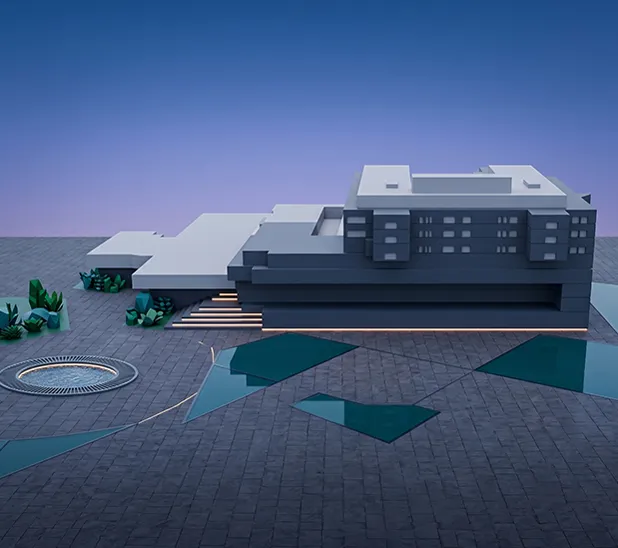
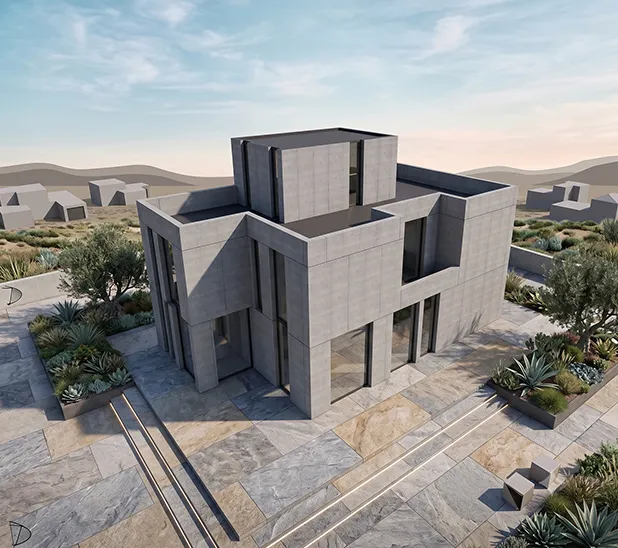
sDA 300/50 percent and ASE 1000,250 calculated per LEED Option 1. Option 2 illuminance modelling at 9am and 3pm equinox available. Specific thresholds vary by LEED version.
What we deliver.
LEED EQ Credit Daylight requires two metrics. sDA 300/50 percent, the percentage of regularly occupied floor area receiving at least 300 lux for 50 percent of annual occupied hours. ASE — the percentage of floor area receiving more than 1,000 lux of direct sunlight for more than 250 occupied hours. Specific thresholds vary by LEED version. We model the building geometry in DesignBuilder, run annual daylight simulation, and document compliance per LEED Option 1. For Option 2 we run point in time calculations at 9 a.m. and 3 p.m. on the equinox.
Why ENERPHI
Daylight modelled in DesignBuilder using the embedded daylighting workflow. We know its convergence behaviour and we know which sky models to use for tropical, temperate and hot arid contexts. Every report includes per-floor sDA and ASE heatmaps. Reviewers see the distribution. Nothing is taken on trust. Glare analysis using DGP and DGI is available as a scope extension when the architecture calls for it.
sDA measures how much of the floor area gets enough daylight for enough of the year. ASE measures glare risk. For LEED v4 Option 1 you need sDA at or above 55 percent and ASE at or below 10 percent across regularly occupied areas.